Digital marketing has transformed the way businesses connect with their audience. In today’s internet-driven world, traditional marketing methods alone are no longer enough to build brand awareness, generate leads, or drive sales. Businesses now rely on digital platforms like search engines, social media, websites, and emails to reach potential customers more effectively.
Whether you are a student, entrepreneur, or business owner, understanding digital marketing is essential to stay competitive in the modern marketplace. From increasing visibility on search engines to engaging users on social media, digital marketing offers measurable, cost-effective, and highly targeted strategies.
In this complete guide, you will learn what digital marketing is, how it works, and the different types of digital marketing that help businesses grow online.
What is digital marketing?
Digital Marketing refers to the use of digital channels, platforms, and technologies to promote products or services to a targeted audience over the internet.
It includes various online strategies such as search engine optimization (SEO), social media marketing, content marketing, email marketing, paid advertising, and more.
Unlike traditional marketing, digital marketing allows businesses to:
- Reach a global audience
- Target specific users based on demographics, interests, and behavior
- Track and measure performance in real-time
- Optimize campaigns for better results
In simple words:
Digital marketing is the process of promoting a business online using digital platforms to attract, engage, and convert customers.
Types of Digital Marketing
Search Engine Optimization (SEO)
Search Engine Optimization (SEO) is the process of optimizing a website to improve its visibility and ranking on search engines like Google, Bing, and Yahoo.
The goal of SEO is to increase organic (free) traffic by making your website more relevant, trustworthy, and user-friendly according to search engine algorithms.
Importance of SEO
SEO plays a crucial role in digital marketing because it helps businesses grow without spending heavily on ads.
Key Importance:
- Increases Organic Traffic
Higher rankings = more clicks = more visitors - Builds Trust & Credibility
Users trust websites that appear on the first page - Cost-Effective Marketing
No need to pay for every click like ads - Long-Term Results
SEO provides sustainable traffic over time - Better User Experience
SEO improves website speed, structure, and usability - Higher Conversion Rates
Targeted users are more likely to convert
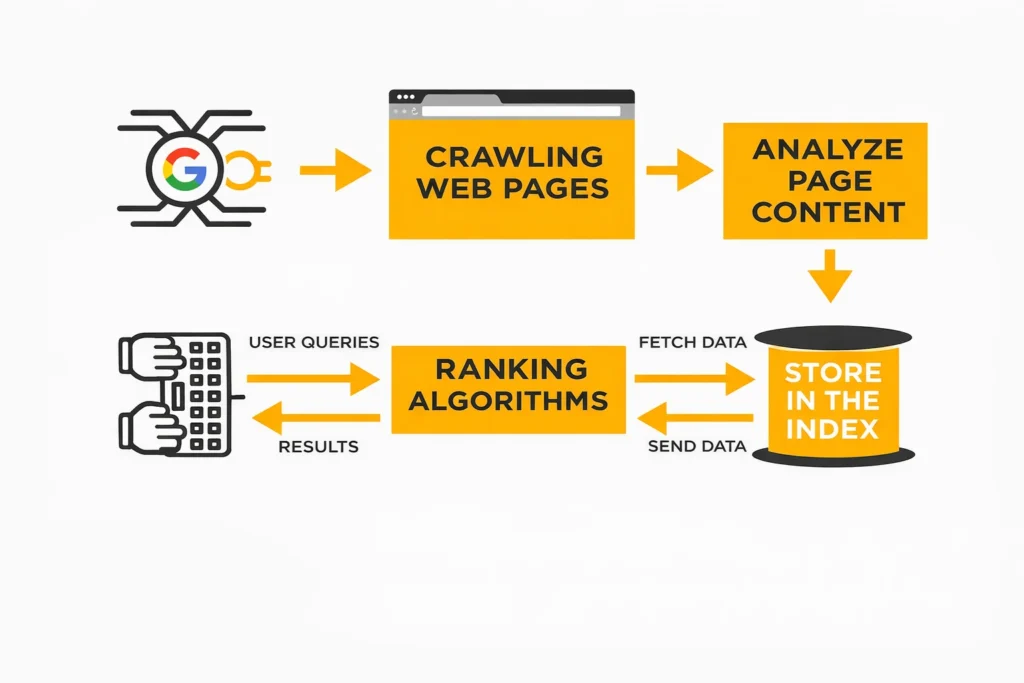
How Search Engines Work (Basic Understanding)
Search engines follow 3 main steps:
1. Crawling
Search engines use bots (spiders) to discover web pages.
2. Indexing
Collected data is stored in a database.
3. Ranking
Pages are ranked based on relevance, quality, and user experience.