


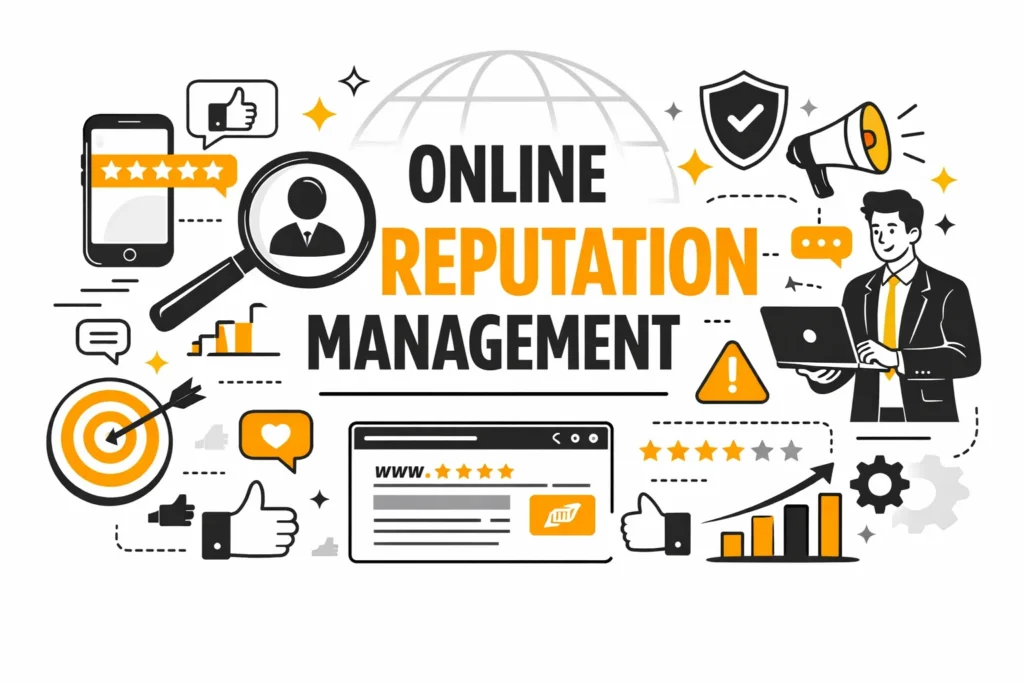
In today’s digital-first world, your reputation is no longer built only through word of mouth—it is shaped by what people see about you online. Whether you are an individual, a small business, or a large brand, your online presence directly influences how others perceive and trust you. This is where Online Reputation Management (ORM) becomes essential.
A strong online reputation can increase customer trust, improve conversion rates, and give you a competitive edge in the market. On the other hand, a poor reputation—such as negative reviews, misleading information, or unresolved complaints—can significantly impact your business growth.
What is Online Reputation Management (ORM)?
Online Reputation Management (ORM) is the practice of monitoring, influencing, and maintaining the online reputation of an individual, brand, or business entity. It involves various strategies and techniques to shape public perception, manage online feedback, and enhance overall digital presence.
Key Aspects of ORM :
- Monitoring: ORM begins with monitoring online mentions, reviews, comments, and discussions related to the entity. This includes tracking social media platforms, search engine results, review websites, forums, and news articles.
- Analysis: After monitoring, the next step is to analyze the sentiment and impact of online mentions. This involves determining whether the mentions are positive, negative, or neutral, and understanding their influence on the overall reputation.
- Engagement: ORM includes actively engaging with online audiences. This could involve responding to customer reviews and comments, addressing concerns, thanking customers for positive feedback, and participating in relevant discussions.
- Content Creation: Creating and promoting positive, high-quality content is an integral part of ORM. This includes publishing valuable information, showcasing achievements, highlighting positive customer experiences, and addressing any misconceptions or negative publicity.
- Search Engine Optimization (SEO): SEO techniques are often employed in ORM to ensure that positive content ranks high in search engine results, while negative or irrelevant content is pushed down. This helps in controlling what people see when they search for the entity online.
- Crisis Management: ORM also involves preparing for and managing online crises or reputation threats. This includes developing strategies for handling negative publicity, addressing rumors or false information, and communicating transparently with stakeholders.
Benefits Of Doing ORM For Any Business :
- Enhanced Credibility and Trust: Maintaining a positive online reputation helps in building trust and credibility with customers, investors, partners, and other stakeholders. Positive reviews, testimonials, and feedback contribute to a favorable perception of the business.
- Improved Customer Perception: ORM allows businesses to address customer concerns promptly and professionally. By responding to feedback and resolving issues, businesses can improve customer satisfaction and perception.
- Increased Customer Engagement: Active engagement on social media platforms and review websites through ORM strategies encourages customer interaction. This leads to higher engagement levels, increased brand loyalty, and positive word-of-mouth recommendations.
- Better Online Visibility: Implementing ORM practices, such as SEO optimization of positive content, ensures that the business maintains a strong and visible online presence. This helps in attracting new customers and retaining existing ones.
- Mitigation of Negative Publicity: ORM strategies enable businesses to effectively manage and mitigate negative publicity, such as negative reviews, social media backlash, or misinformation. By addressing issues transparently and professionally, businesses can minimize the impact of negative content.
- Competitive Advantage: A positive online reputation can serve as a competitive advantage in the market. Customers are more likely to choose a business with a strong reputation over competitors with a negative or limited online presence.
- Brand Protection: ORM helps protect the brand’s image and identity online. It ensures that the business maintains control over how it is perceived and prevents reputation-damaging content from overshadowing positive aspects.
- Enhanced Recruitment and Partnerships: A positive online reputation not only attracts customers but also for potential employees, investors, and business partners. It reflects positively on the company culture, values, and overall business ethics.
- Effective Crisis Management: Businesses with robust ORM strategies are better prepared to handle crises and reputation threats. They can respond quickly, address issues proactively, and maintain open communication, minimizing long-term damage.
Example Of Some Businesses That are Performing Good By Doing ORM :
- Amazon: Amazon, one of the world’s largest e-commerce platforms, prioritizes ORM to maintain its stellar reputation. By actively managing customer reviews, addressing feedback promptly, and showcasing positive experiences, Amazon has built a trustworthy brand image, leading to increased customer loyalty and sales.
- Tesla: Tesla, a leading electric vehicle manufacturer, utilizes ORM to address public perceptions, respond to customer concerns, and highlight its innovations. Through transparent communication and managing online discussions, Tesla has strengthened its position as a pioneer in sustainable transportation.
- Airbnb: Airbnb, a global online marketplace for lodging and travel experiences, focuses on ORM to ensure positive guest experiences and host interactions. By managing reviews, resolving disputes, and promoting safety measures, Airbnb has built a reliable platform trusted by millions of users worldwide.
- Starbucks: Starbucks, a renowned coffeehouse chain, leverages ORM to engage with customers, gather feedback, and maintain brand consistency across locations. By actively listening to customers, addressing issues, and showcasing community initiatives, Starbucks has created a loyal customer base and a positive brand image.
- Zappos: Zappos, an online shoe and clothing retailer, emphasizes ORM to deliver exceptional customer service and personalized experiences. By responding to customer queries, resolving issues promptly, and fostering a positive company culture, Zappos has earned a reputation for excellent customer satisfaction and loyalty.
- Walmart: Walmart, a multinational retail corporation, uses ORM to manage its online reputation across various platforms. By addressing customer concerns, highlighting community initiatives, and showcasing product quality, Walmart has strengthened its position as a trusted retail destination.
ORM specifically on social media platforms to enhance their performance:
Nike: Nike, a global sportswear and footwear brand, has excelled in utilizing ORM on social media to engage with its audience effectively. By actively managing its social media profiles, responding to customer inquiries, and addressing feedback, Nike has built a strong online community of loyal customers and brand advocates.
Netflix: Netflix, a leading streaming service provider, emphasizes ORM on social media to maintain a positive relationship with its subscribers. By engaging in interactive campaigns, sharing entertaining content, and addressing user concerns promptly, Netflix has established itself as a customer-centric brand, driving customer retention and acquisition.
Dove: Dove, a personal care brand, focuses on ORM on social media to promote its inclusive messaging and values. By showcasing diverse representations, encouraging body positivity discussions, and addressing societal issues, Dove has created a strong online presence and earned customer loyalty.
GoPro: GoPro, a manufacturer of action cameras, harnesses ORM on social media to showcase user-generated content and highlight adventure experiences. By encouraging customers to share their GoPro footage, engaging with followers, and amplifying positive stories, GoPro has built a passionate community of brand enthusiasts.
Oreo: Oreo, a popular cookie brand, leverages ORM on social media to create engaging and shareable content. By capitalizing on trends, interacting with followers creatively, and running interactive campaigns, Oreo has achieved viral success and increased brand visibility on social platforms.
Step By Step Process To Start ORM For your or any Business :
- Assess Current Reputation: Begin by conducting a thorough assessment of the business’s current online reputation. Monitor social media platforms, review websites, search engine results, and other online channels to understand how the business is perceived by customers, stakeholders, and the public.
- Set Goals and Objectives: Define clear ORM goals and objectives based on the assessment. Determine what aspects of the business’s reputation need improvement, such as addressing negative reviews, enhancing brand visibility, or increasing positive feedback.
- Develop a Strategy: Create a comprehensive ORM strategy that outlines the tactics, tools, and resources needed to achieve the established goals. This strategy should include strategies for monitoring, engagement, content creation, SEO optimization, crisis management, and more.
- Monitor Online Mentions: Implement tools and processes to monitor online mentions of the business, including social media monitoring tools, Google Alerts, review monitoring platforms, and sentiment analysis tools. Regularly track mentions, reviews, comments, and discussions related to the business
- Engage with Audiences: Actively engage with online audiences by responding to customer reviews, comments, and inquiries promptly and professionally. Address concerns, acknowledge positive feedback, and maintain a consistent brand voice across all communication channels.
- Create Positive Content: Develop and promote positive, high-quality content that showcases the business’s strengths, achievements, and value proposition. Publish content on the business’s website, social media profiles, blog, and other relevant platforms to enhance its online reputation.
- Optimize for SEO: Implement SEO strategies to ensure that positive content ranks higher in search engine results, while negative or irrelevant content is pushed down. Optimize keywords, meta tags, and website structure to improve online visibility and reputation.
- Manage Reviews and Feedback: Monitor and manage online reviews and feedback proactively. Encourage satisfied customers to leave positive reviews, address negative reviews professionally, and seek resolutions for customer concerns to demonstrate responsiveness and accountability.
- Handle Crisis Situations: Develop a plan for handling online crises or reputation threats effectively. Establish protocols for responding to negative publicity, addressing rumors or misinformation, and managing crisis communication with stakeholders.
- Evaluate and Adjust: Continuously monitor the effectiveness of ORM strategies and tactics. Use analytics tools to track key metrics, such as sentiment analysis, online engagement, website traffic, and review ratings. Evaluate results regularly and make adjustments to the ORM strategy as needed to optimize outcomes.
Some Important Platforms to Focus on to Build Reputation of any Business :
- Website: A business’s website is its digital storefront and a crucial platform for building reputation. It should be well-designed, user-friendly, and optimized for search engines (SEO). The website should showcase the business’s products or services, provide valuable content, and offer easy ways for visitors to contact or interact with the business.
- Social Media: Social media platforms like Facebook, Instagram, Twitter, LinkedIn, and YouTube are powerful tools for building and managing reputation. Businesses should maintain active profiles on relevant social media channels, share engaging content, interact with followers, respond to messages and comments, and monitor brand mentions.
- Review Websites: Platforms such as Google My Business, Yelp, TripAdvisor, and industry-specific review sites are essential for managing online reviews and reputation. Encourage satisfied customers to leave positive reviews, address negative reviews promptly and professionally, and showcase testimonials and ratings on the business’s website.
- Search Engines: Search engine results pages (SERPs) are often the first impression customers have of a business. Focus on SEO strategies to ensure that positive and relevant content ranks high in search results, while negative or irrelevant content is minimized. Optimize keywords, meta tags, website content, and online profiles to improve visibility and reputation.
- Online Communities and Forums: Engage with online communities and industry forums where your target audience participates. Contribute valuable insights, answer questions, and share expertise to establish the business as a trusted authority and build relationships with potential customers and influencers.
- Email Marketing: Email marketing is a direct and effective way to communicate with customers and nurture relationships. Use personalized and targeted email campaigns to share valuable content, promotions, updates, and customer testimonials that reinforce the business’s reputation and value proposition.
- Blogs and Content Platforms: Create and publish informative and engaging content on blogs, guest posts, and content platforms relevant to the business’s industry. Share insights, industry trends, case studies, success stories, and thought leadership content to demonstrate expertise and build credibility.
- Press Releases and Media Coverage: Utilize press releases, media outreach, and partnerships with journalists and influencers to garner positive media coverage and PR opportunities. Highlight achievements, milestones, awards, charitable initiatives, and positive news to enhance the business’s reputation and brand image.